Every summer, Rabat-Sale experiences periods of intense heat that endanger the most vulnerable. The elderly are particularly at risk: their bodies regulate temperature less well, they feel thirst less and often take medication that increases dehydration. This guide explains how to recognise danger signs and protect our elders during heatwaves.
Why are the elderly more exposed?
With age, the sensation of thirst diminishes, so an elderly person can become dehydrated without realising it. Their skin sweats less, making temperature regulation less effective. Many common treatments (diuretics, some heart or blood-pressure medications) increase water loss. Isolation worsens the risk.
Recognising the signs of dehydration
Learn to spot the warning signals: dry mouth and lips, scarce and dark urine, unusual fatigue, drowsiness or, conversely, agitation, dizziness, headaches, muscle cramps and loss of appetite. In an elderly person, sudden confusion or disorientation can be the first sign of advanced dehydration.
Heatstroke: a life-threatening emergency
Heatstroke is the most serious form. It shows as a very high body temperature, hot and sometimes dry skin, intense headaches, confusion and even loss of consciousness. It is a life-threatening emergency: call 141 (public SAMU) or 150 (Civil Protection) immediately. While waiting, move the person to a cool shaded spot, partly undress them, cool them with damp cloths and give small sips of water if conscious.
The right actions during a heatwave
A few simple measures greatly reduce the risk: encourage regular drinking even without thirst (water, cool herbal teas, cold soups), keep the home cool by closing shutters and curtains during the day and ventilating at night, avoid going out during the hottest hours (12pm-4pm), wear light, pale clothing, and regularly moisten the skin with a spray or damp cloth. Meals should be light and water-rich (fruit, vegetables, dairy).
The role of home follow-up in summer
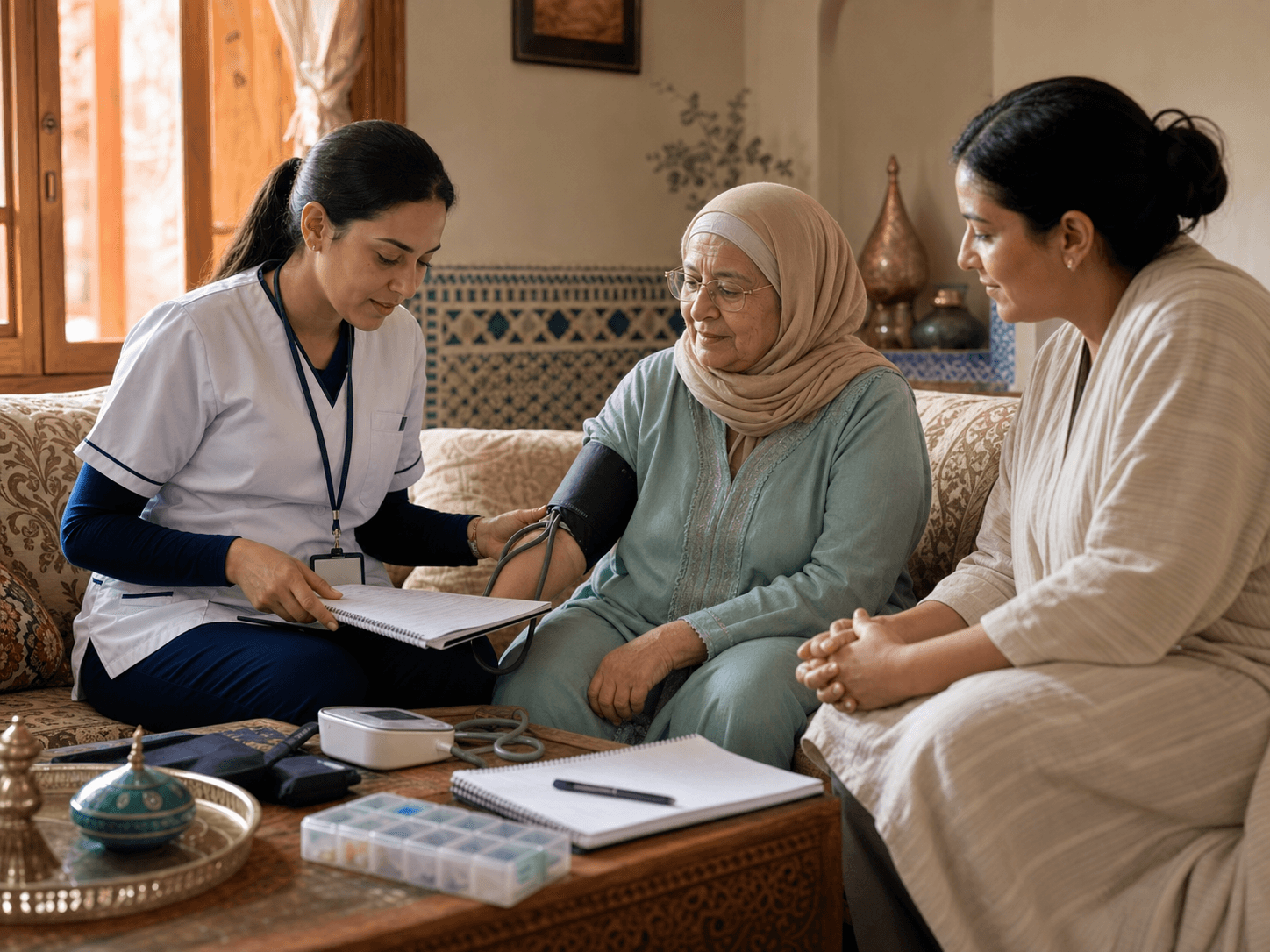
For isolated or dependent elderly people, a regular presence is valuable in summer. A home nursing visit allows monitoring of hydration, temperature and general condition, and early detection of any sign of dehydration. A home care service for the elderly can provide a daily presence, ensure regular drinking and keep the home cool.
Never face doubt alone
If in doubt about an elderly relative's condition during a hot spell, do not wait. Contact their doctor, or for serious signs, the emergency services. Early care prevents sometimes dramatic complications.
Important reminder: this article gives general prevention advice. In case of heatstroke or severe dehydration, call 141 or 150 immediately.
Frequently asked questions
Why are the elderly more sensitive to heat?
With age, the sensation of thirst diminishes, the skin sweats less and many treatments (diuretics, heart or blood-pressure medication) increase water loss. An elderly person can therefore become dehydrated without realising it.
What are the signs of heatstroke?
A very high body temperature, hot and sometimes dry skin, intense headaches, confusion and sometimes loss of consciousness. It is a life-threatening emergency: call 141 or 150 immediately.
How much should an elderly person drink in intense heat?
They should drink regularly throughout the day, even without thirst: water, cool herbal teas, cold soups, plus water-rich fruit and vegetables. The exact amount should take the doctor's advice into account, especially with heart or kidney failure.
How do I keep a home cool during a heatwave?
Close shutters and curtains during the day to block heat, ventilate at night when temperatures drop, and use a fan or air conditioning if available. Moistening the skin with a spray also helps cool down.