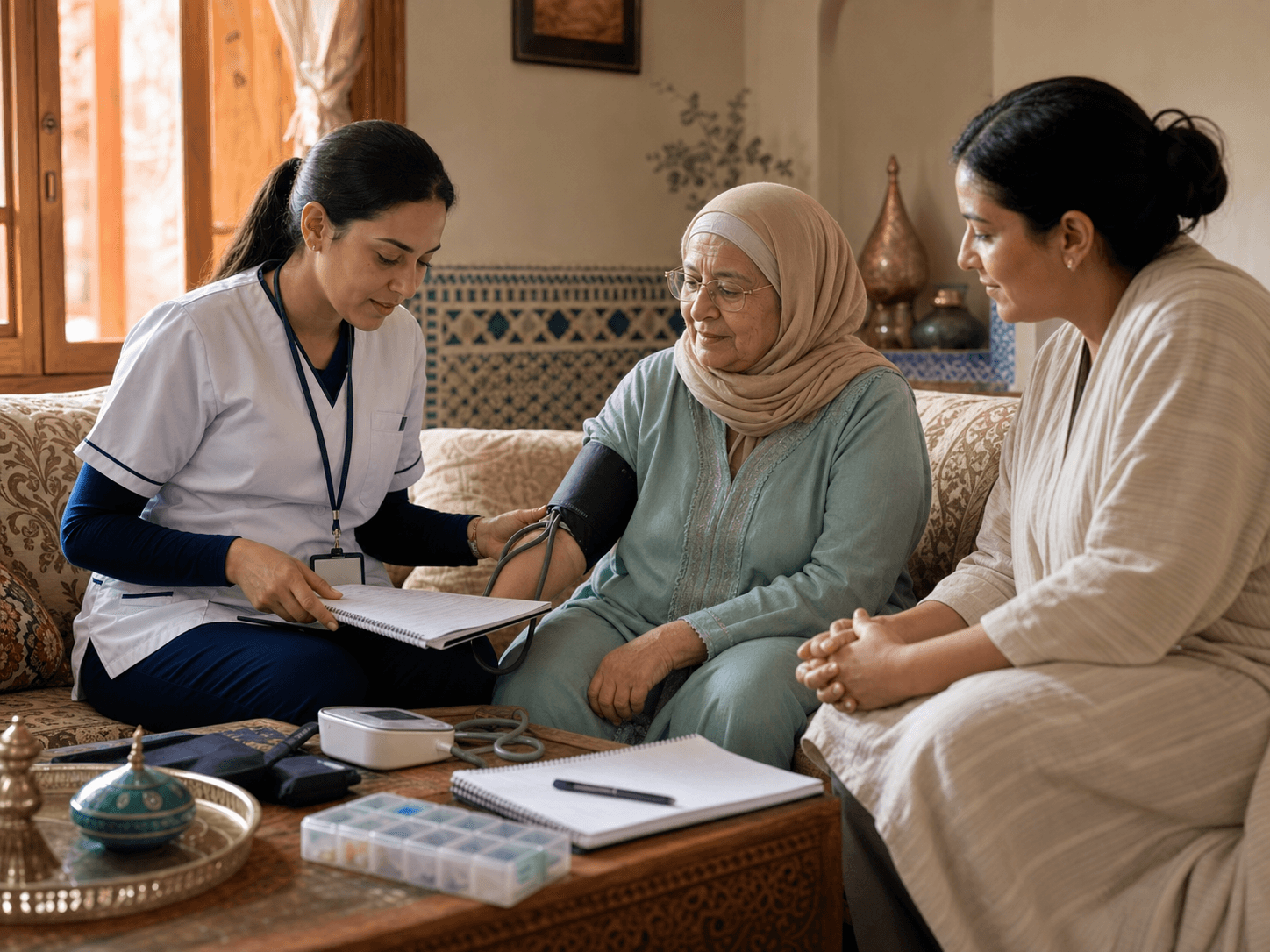
More and more elderly people live alone in Rabat, whether by choice or because their children live elsewhere, sometimes abroad. This independence is precious, but it comes with specific risks worth anticipating. This article reviews the main dangers and offers concrete solutions to help our elders age safely at home.
The risk of falls
A fall is the leading domestic accident among the elderly, and its consequences can be severe. Living alone worsens the danger, as the person may remain on the floor for hours unable to call for help. To reduce this risk: secure the home (fixed rugs, grab bars in the bathroom, good lighting, removing obstacles) and consider a personal alarm device.
Missed and mismanaged medication
With age, managing several medications becomes complex. A home nursing visit helps prepare pill organisers and check treatments are taken correctly. For injectables (insulin, anticoagulants), the nurse handles home injections safely.
Social isolation and its health effects
Isolation is not just about morale: it has real effects on physical and mental health. Prolonged loneliness increases the risk of depression, cognitive decline and malnutrition. Regular visits from a health professional provide reassuring presence and help detect changes early.
Malnutrition, a silent danger
An elderly person living alone tends to cook and eat less, gradually leading to malnutrition, which weakens immunity and slows healing. A home care service for the elderly can include help with meal preparation.
Monitoring chronic conditions
Many elderly people live with one or more chronic conditions: hypertension, diabetes, heart failure. Regular monitoring of vital signs allows treatments to be adjusted and avoids hospitalisation. The home nurse handles this monitoring and reports to the attending physician.
Organising coordinated care
The most effective solution combines home safety, regular nursing visits, home help for daily tasks, and coordination with the doctor and family. SAMU Rabat offers this coordinated support across Rabat, Sale and Temara, with a family contact who receives regular reports — reassuring relatives even from a distance.
Reminder: this article gives general advice. Every situation is unique and deserves a personalised assessment by a health professional.
Frequently asked questions
How can I reduce the fall risk for an elderly person living alone?
Secure the home (fixed rugs, bathroom grab bars, good lighting, removing obstacles), encourage suitable footwear and consider a personal alarm device that can alert others in case of a fall.
Can a nurse help manage medication?
Yes. A home nurse can prepare pill organisers, check treatments are taken correctly, monitor side effects and give necessary injections, greatly reducing the risk of errors.
Why is malnutrition dangerous in the elderly?
Malnutrition weakens the immune system, increases fall risk and slows healing. An elderly person living alone often eats less, so monitoring weight, appetite and hydration is important.